ReComputer R1000 industrial grade edge IoT controller review
By Rob Zwetsloot. Posted

We’ve reviewed a couple of products from Seeed Studio’s reTerminal line in the past and have always been impressed by their incredible build quality and functionality. The reComputer R1000 seems to be using that design ethos for a slightly different kind of product – an all-in-one edge IoT controller.

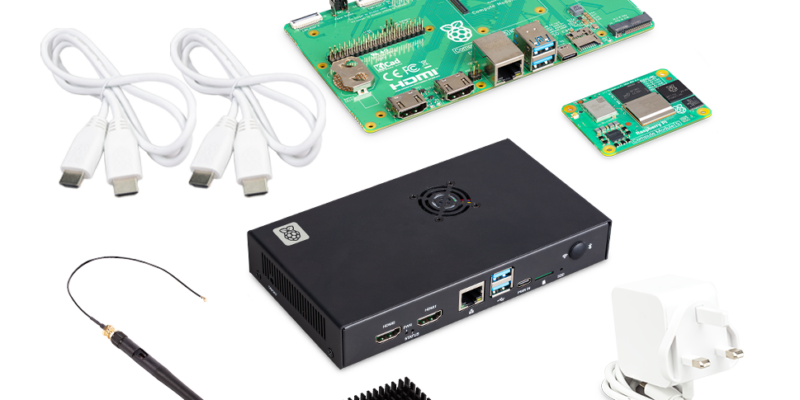
Out of the box it looks a bit like an unassuming full Raspberry Pi in a nice heat-sink case, albeit a fair bit chunkier. The size comes from the sheer number of features packed into the box – UPS modules, power-over-Ethernet, multiple RJ45 ports, 4G modules, LoRa capabilities, external antenna ports, SSD slot, an array of terminals, and a Compute Module 4 to power it all.
A lot of these add-ons are optional and you can build your preferred R1000 online or get one of the pre-made packages – we specifically have the R1025 build for review, which comes with 4GB RAM and 32GB eMMC – and there are various modules for adding 4G or LoRaWAN that range in price and functionality.

Good to go
It comes pre-assembled out of the box like the rest of the range, and is dead easy to disassemble and update, swap out, or add compatible hardware such as the optional extras. There’s a comprehensive guide in the Seeed Studio docs which also covers how to flash a new OS to the hardware. Raspberry Pi OS is supported as you’d expect, with extra drivers you’ll need to install when flashing from scratch, and there’s also official Ubuntu support. While a product like this will largely be used headless, there is a HDMI port in case you need to do some work at the box itself, such as turn on SSH if you forgot during the flashing process.
The hardware comes with a little clip to mount it on its side, making it jut out from whatever surface it’s attached to, which seems a little precarious. Still, it holds strong and does let you keep all the various I/O easily accessible, with the all-important serial ports on the front.
Full support
Thanks to the installed CM4 it is very easy to use and customise, and it’s nice and quick as well. The build quality is really top notch too, just as we’d expected, and the docs are fairly comprehensive whether you want to use it in an industrial setting or even at home as your IoT controller with Home Assistant – and at the lower end of its price scale it’s not that uncompetitive for using at home either if you have some serious home automation requirements.
Verdict
10/10
Very complete piece of hardware that you can customise for nearly any use of IoT, from consumer to industry
Specs
Interfaces: 1×Gigabit Ethernet (with PoE), 1×100MB Ethernet, 3×3-pin RS485 Terminal Block, 2×USB-A 2.0 Host, 1×USB C (for flashing OS), 1x HDMI Wireless protocols: Wi-Fi, BLE, LoRA, 4G LTE, Zigbee Power: 2~24V AC/9~36V DC, idle 2.88 W, full load 5.52W, overvoltage protection 40V

Rob is amazing. He’s also the Features Editor of Raspberry Pi Official Magazine, a hobbyist maker, cosplayer, comic book writer, and extremely modest.
Subscribe to Raspberry Pi Official Magazine
Save up to 37% off the cover price and get a FREE Raspberry Pi Pico 2 W with a subscription to Raspberry Pi Official Magazine.