Secure your Raspberry Pi with ZYMKEY
By Russell Barnes. Posted

Add security to your Raspberry Pi and software by backing the ZYMKEY Kickstarter for private USB and GPIO secure keys
Security is increasingly becoming a concern for computer users, and the Raspberry Pi really should not be the exception to the rule. Although a lot of people use it here and there for fun little projects at home, others take it to meets and maker spaces to show off more elaborate setups. Information can easily be accessed and stolen via the SD cards and other storage due to the nature of the Pi, and there’s very little defense against it.
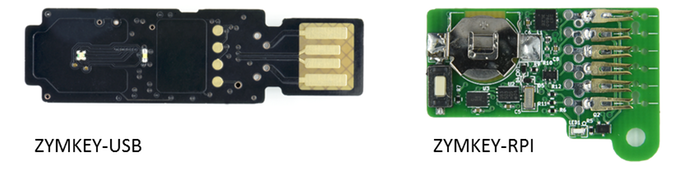
Enter the ZYMKEY, a physical deterrent to people doing the unquestionable. Both a USB and GPIO header version can be plugged into your Pi with their own embedded private key that makes it much more difficult for people to steal your personal information.
These crypto keys, while an excellent deterrent, need your support to become a reality. The creators at Zymbit are currently Kickstarting the production for the ZYMKEY and need your help to make it a reality. Head over to their Kickstarter page for more information, tech specs and an explanation of their cloud service attached to the project.
Let’s keep our systems secure!

Russell runs Raspberry Pi Press, which includes The MagPi, Hello World, HackSpace magazine, and book projects. He’s a massive sci-fi bore.
Subscribe to Raspberry Pi Official Magazine
Save up to 37% off the cover price and get a FREE Raspberry Pi Pico 2 W with a subscription to Raspberry Pi Official Magazine.