Set Marvin Free
By Rob Zwetsloot. Posted
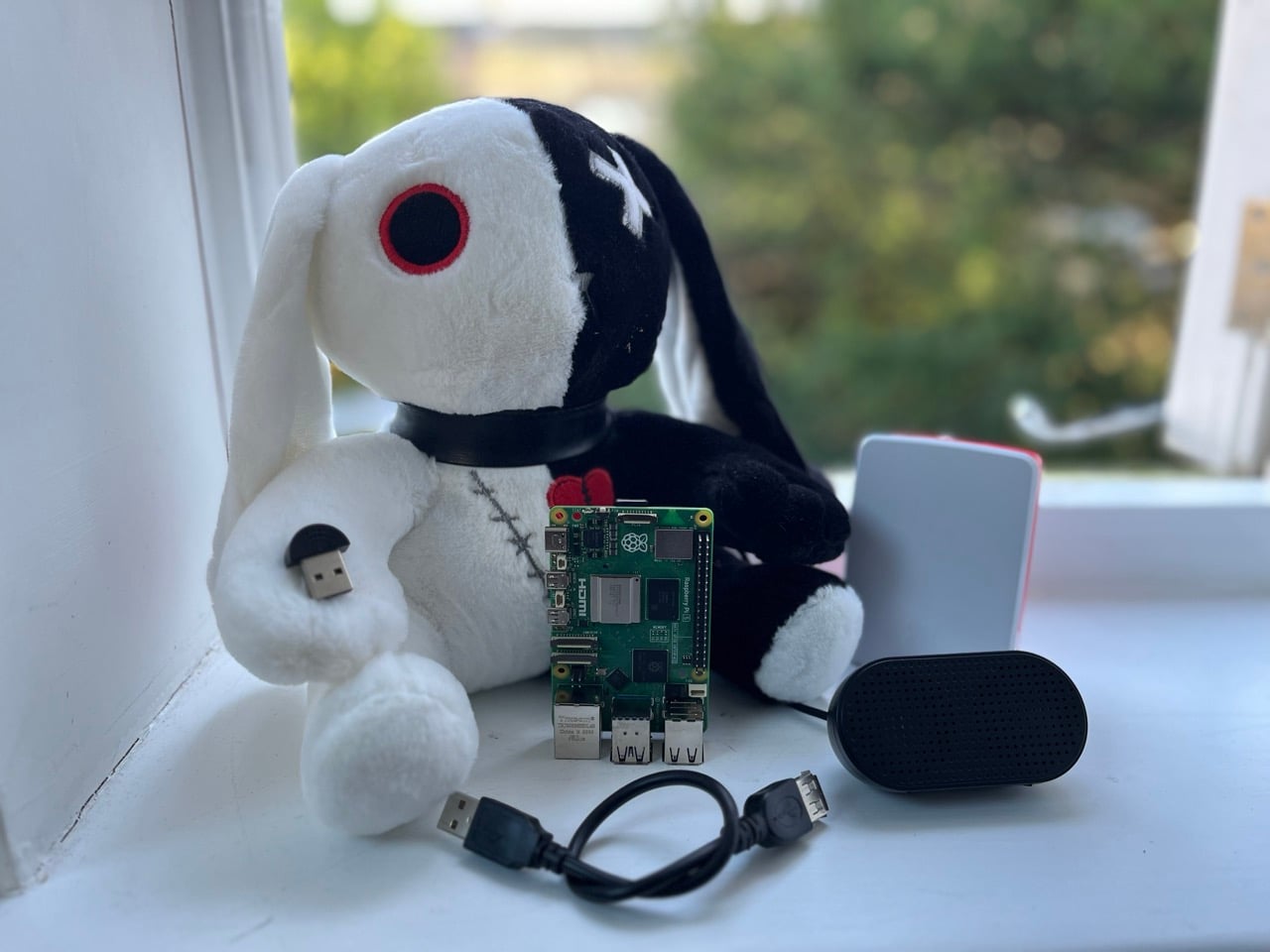
Despite the plethora of adorable talking dolls that have been available to children since at least the 1980s, talking dolls are still disconcerting to some folks; scientifically known as ‘the heebie-jeebies’. This did not stop Sebastião Quintas while making Marvin.
Set Marvin Free is a “conversational doll that hosts a speech-based escape game,” Sebastião tells us. “The project combines a speech interface with playful storytelling, transforming a regular doll into an interactive game master. Players progress through four different mini games that branch into 24 possible endings. The project runs entirely offline, using a Raspberry Pi 5, as well as a microphone and speaker.”
Sebastião was looking to explore using a completely vocal interface for a toy or game, with no visual cues to rely on, and to make it completely offline with everything running locally with no need for external APIs: “This greatly simplifies the infrastructure required, but at the cost of trying to fit everything on-device,” he says.
Rasp-beary Pi
Landing on Raspberry Pi to power Marvin seemed like a natural conclusion.
“Raspberry Pi is the perfect fit for this kind of project: it’s powerful enough to run a wake-word detector, a lightweight speech-recognition model, and the full NLU pipeline entirely offline, while its Linux-based environment makes setup straightforward,” Sebastião explains. “I experimented with a Raspberry Pi Zero as well, but its underlying CPU architecture wasn’t compatible with some of the deep-learning packages needed. Oh, and [Raspberry Pi’s] compact format allows for it to be ‘easily’ concealed inside a stuffed animal!”
As Sebastião developed the project – adding the ability to process a wake word and tell a story – he decided to add more, feeling the idea at this stage was ‘a little bit empty’: “As a result, several more features were added, such as cracking jokes, giving random facts, riddles, tongue-twisters, etc. This culminated in the idea of adding a more ambitious feature through the means of a speech-based game that not only provided a different type of interaction, but also a fun venue for more storytelling.”
These speech-based games resulted in their own extra challenges – mostly memorising details necessary for the games as they progress. “It’s crazy how much work goes into making some of these seemingly simple games!” Sebastião notes.

Rob is amazing. He’s also the Features Editor of Raspberry Pi Official Magazine, a hobbyist maker, cosplayer, comic book writer, and extremely modest.
Subscribe to Raspberry Pi Official Magazine
Save up to 37% off the cover price and get a FREE Raspberry Pi Pico 2 W with a subscription to Raspberry Pi Official Magazine.
More articles
Raspberry Pi Official Annual 2027 is out now!
New name, same fantastic content
Read more →
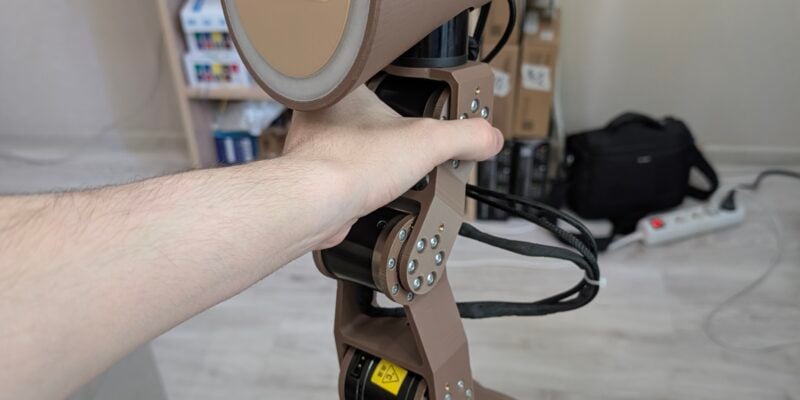
Robot arm lamp
This won’t be jumping on any animation studio logos
Read more →

Sage Cadence interview
An electrical engineering student trying to provide the educational content she would have wanted
Read more →