Teka-Sketch
By Andrew Gregory. Posted
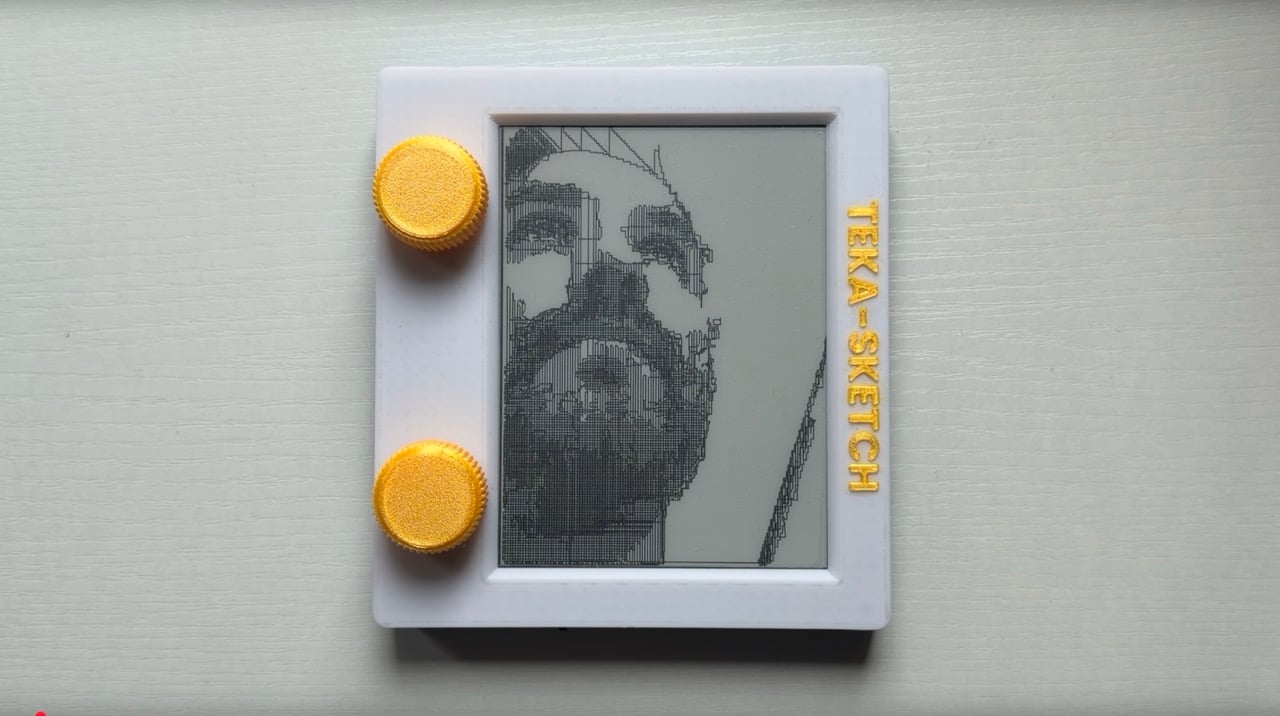
The Etch-a-Sketch was, for this author at least, impossibly difficult, frustrating, and not fun at all. In other, more artistically gifted hands, its constraints lead to brilliant artworks, but for us, the Etch-a-Sketch was an instrument of torture.
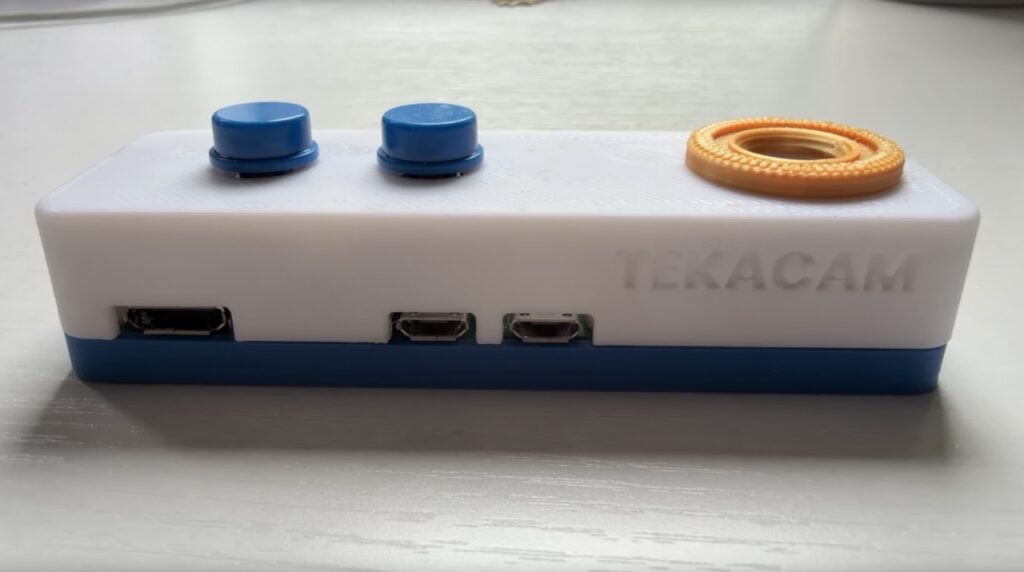
Maker Tekavou has taken the Etch-a-Sketch and made it better, by not making it an Etch-a-Sketch at all – his version uses an e-ink screen, rather than the original grey powdered aluminium which gets scraped off to reveal the black underneath. He’s also developed a way of turning photographs into Etch-a-Sketch-like images, and has built a Raspberry Pi Zero 2 W-based camera to take images and upload them to the new and improved Teka-Sketch. It takes 10–15 minutes to render an image on the Teka-Sketch when the conversion is performed on the Raspberry Pi Zero 2 W; to speed this process up, the maker has added a Mac mini in between the camera and the display, to perform the work of turning the image from a photograph into a realistic Etch-a-Sketch image.
Features Editor Andrew trawls the internet for Cool Stuff while keeping the magazine running smoothly.
Subscribe to Raspberry Pi Official Magazine
Save up to 37% off the cover price and get a FREE Raspberry Pi Pico 2 W with a subscription to Raspberry Pi Official Magazine.
More articles
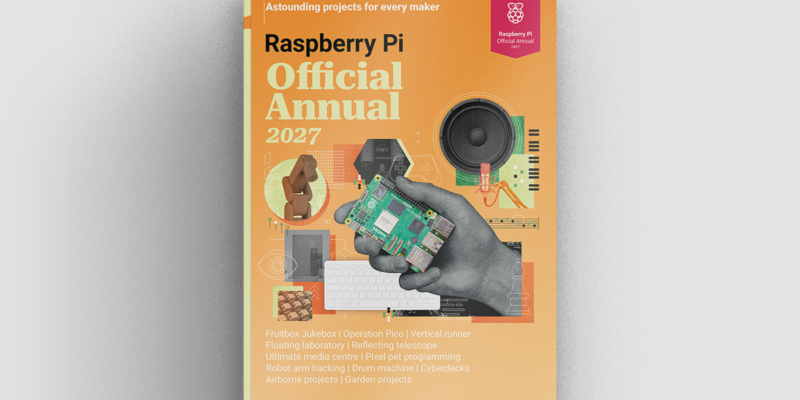
Raspberry Pi Official Annual 2027 is out now!
New name, same fantastic content
Read more →
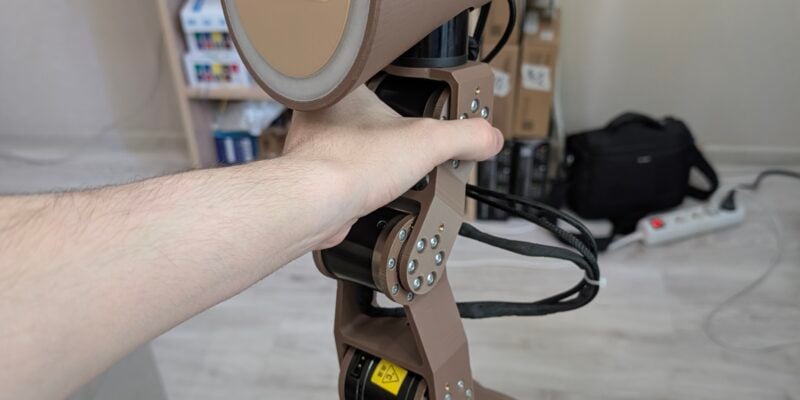
Robot arm lamp
This won’t be jumping on any animation studio logos
Read more →
Sage Cadence interview
An electrical engineering student trying to provide the educational content she would have wanted
Read more →