Vineyard Kikushima
By Rob Zwetsloot. Posted

We’ve covered several plant and garden automation projects in The MagPi before, and even a robot farm or two. However, we’ve not previously come across a vineyard with some IoT/automation abilities thanks to Raspberry Pi.

Make beautiful beats with the complete Raspberry Pi music production toolkit.
“We are now doing viniculture in Koshu city, Yamanashi Prefecture, and we aim to open a small winery in Katsunuma in the spring of this year,” says Kunio Kikushima, owner of Vineyard Kikushima. “We also aim for eco-friendly wine without any agricultural chemicals where possible. We are now doing viniculture and vinification.”
Kunio is an ex-employee of electronics manufacturers turned vine farmer, he lives a modest lifestyle but wants to make great wine. Kunio didn’t have much experience with programming and developing, but a chance meeting with friend of The MagPi, Masafumi Ohta of the Japanese Raspberry Pi Users Group, enabled him to gain some knowledge of Raspberry Pi and how it could be used to great effect in this instance.

Solving a problem
Grapes can be prone to disease, especially in the relatively high temperatures and humidity of Vineyard Kikushima. While using agricultural chemicals and pesticides helps, they can alter the flavour of the wine, so Kunio needs a more exact method of applying them in the ideal weather conditions for maximum efficiency.
“I wanted to check the timing of high humidity [by] collecting temperature and humidity data automatically measured at regular intervals,” he explains. “I want to check those data in real-time through the network, as the fields are scattered and far away from my office.” This also means the setup requires solar and battery electric power.

Field tests
The system is currently in a trial phase, with one prototype being used for the field test, and another reserved for system development. The total cost is ¥30,000–¥40,000 [about £225–£300] including the solar power equipment. Adding 3G dongles to the system, the total expected cost will be ¥50,000–¥60,000 [about £375-£450].
Kunio hopes to add more sensors in the future and offer the system to other farmers in the region.
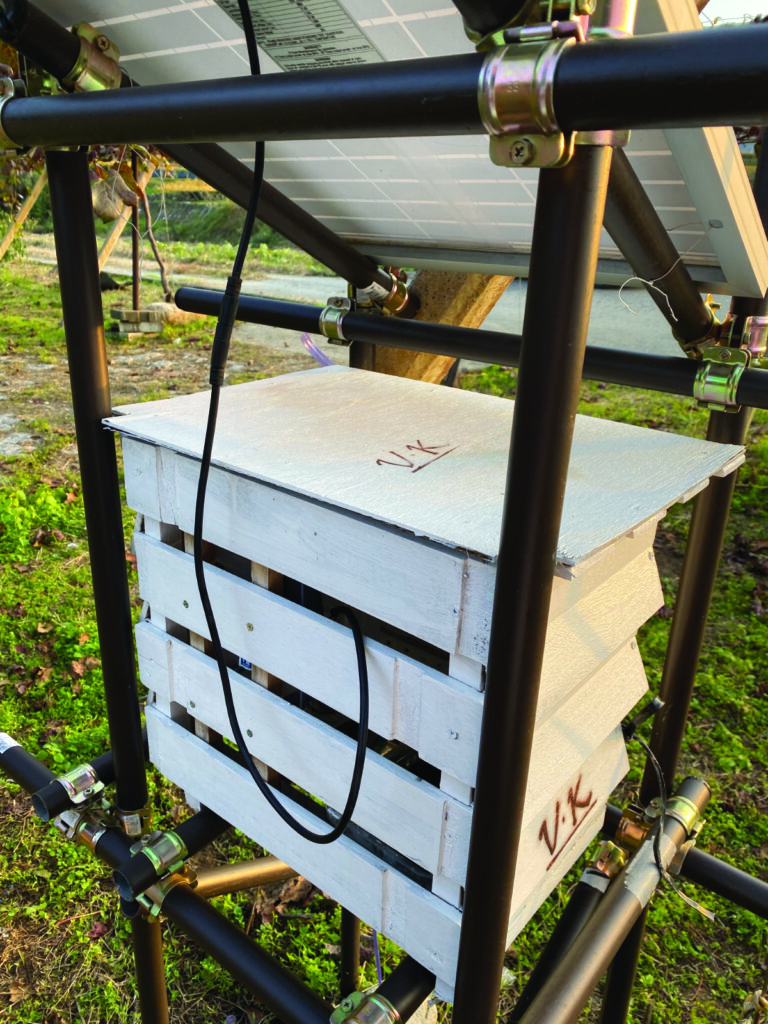
“It is very easy to get Raspberry Pi at the store in Akihabara and online shops,” he says. “There are tons of various use cases I can see on the internet. I think I had the illusion that I could make [the vineyard-monitoring system] without any programming skills on Linux. But it is very fun for me to assemble by watching and imitating, and it could be applied to another use with the same platform if the automatic display and measurement of temperature and humidity in fields works well.
“I could make delicious wine with Raspberry Pi.”
How to make Raspberry Pi wine


Rob is amazing. He’s also the Features Editor of Raspberry Pi Official Magazine, a hobbyist maker, cosplayer, comic book writer, and extremely modest.
Subscribe to Raspberry Pi Official Magazine
Save up to 37% off the cover price and get a FREE Raspberry Pi Pico 2 W with a subscription to Raspberry Pi Official Magazine.
More articles
Win 1 of 3 Pironman 5 Pro Max cases!
Transform your Raspberry Pi with this amazing case
Read more →

Learning to code in an AI age
A new Raspberry Pi Foundation course helps young people learn to code.
Read more →
Poor man’s Polaroid camera
There’s something really big and chunky about this build that we find reassuring
Read more →