Vizy AI camera review
By Lucy Hattersley. Posted

Vizy is an interesting camera product that combines Raspberry Pi 4 with a Sony camera and lens. This is housed inside a custom plastic case with heatsinks, a fan, and a high-current I/O connection.
Once it’s on your network, you can log in via a web browser pointing to vizy.local, and all the interaction takes place through this web-based interface. Vizy has a laudable aim of making it easy for students and makers to explore AI-powered machine learning projects.

Vizy setup
Vizy comes self-assembled (you can choose between 2GB, 4GB, and 8GB Raspberry Pi inside). A microSD card is pre-installed and all you need to do is plug it in and press the button to turn it on.
While there’s no fun in the build process, it is quick to get up and running. On first run, it uses Raspberry Pi’s Wi-Fi module to broadcast a network, which you can join from another computer. You can also connect via an Ethernet cable, which was the approach we favoured.

Once connected, you set up Vizy to automatically connect to a local wireless network so it connects whenever you boot up. Then, you can investigate the built-in software, divided into a range of apps and examples.
Built-in apps include a Bird Feeder (identifies birds), MotionScope (captures the motion of objects), and Object Detector (detects and logs classes with text alerts sent via Signal).
The examples are more simple, including OpenCV Edge Detection, Pet Companion, Pic Taker, TensorFlow Lite, and simple video capture. You can investigate the Python code for each example, to help you start to build your own apps. Detailed documentation at docs.vizycam.com includes a ‘Getting started’ guide, and information about accessories and applications, plus some simple API information. You can access the Python editor directly from the web interface, or log into the Shell and control Raspberry Pi directly.
These built-in programs ensure Vizy is a great platform for exploring machine learning possibilities. We particularly liked MotionScope, which captures the movement of an object (such as a bouncing ball) and provides detailed x, y, and z co-ordinates as graphs and a data dump. We can imagine this working incredibly well alongside calculus learning.

Meanwhile, the Object Detector and Bird Feeder can be used to analyse and respond to scenes, creating alerts for specific items. We had a lot of fun tracking a pet cat and sending alarms when she was detected on a table.
The camera is the equivalent of a Raspberry Pi High Quality Camera, although we’d be happier if it used an official camera offering. We also found the 1.5 m power lead to be a little short for some setups, mainly when we tried to move out into the garden for testing – although we note a Power over Ethernet Splitter (£15/$18) that would work well in this setting. There is also an optional outdoor enclosure with IP66 rating and a 4G LTE cellular network adapter.
Vizy provides you with a great introduction to image recognition that does a lot of the heavy lifting, allowing you to focus on practical projects. We think this would be ideal in a classroom setting.
Verdict
9/10
An interesting camera that allows you to quickly investigate image recognition projects.
Specs
Components: Raspberry Pi 4 (2, 4, or 8GB RAM), universal tripod mount, 32GB microSD, 25 W AC power supply, Vizy case (900 g; 10×15×10 cm)
Camera: 12-megapixel Sony image sensor (IMX477), wide-angle, 3.25 mm M12 lens (optional high-quality 8-50 mm C/CS zoom lens), electronically switchable IR-cut filter
I/O: Digital I/O, analogue I/O, PWM, UART serial; high-current output (up to 1000 mA per channel), optional lighting accessory

Lucy is Editor of Raspberry Pi Official Magazine.
Subscribe to Raspberry Pi Official Magazine
Save up to 37% off the cover price and get a FREE Raspberry Pi Pico 2 W with a subscription to Raspberry Pi Official Magazine.
More articles
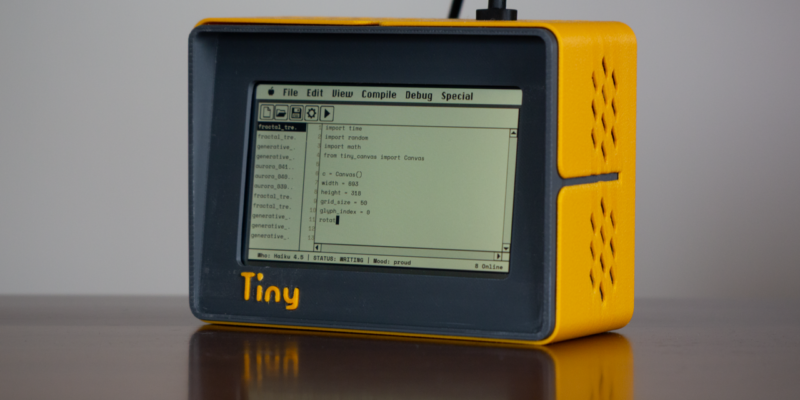
TinyProgrammer
Want a coding companion? TinyProgrammer lets you watch as it tinkers with Python all day. Sean McManus finds out how it works
Read more →

Make a Smart Home in Raspberry Pi Official Magazine issue 167
The dream of smart, connected devices controlling your home automatically, is especialy appealing on a lazy day when we’re trying to get work done in a heatwave. Maybe this will be the year we finally integrate temperature sensors with fans and a drinks dispenser to keep us cool, or maybe not, but we do know […]
Read more →
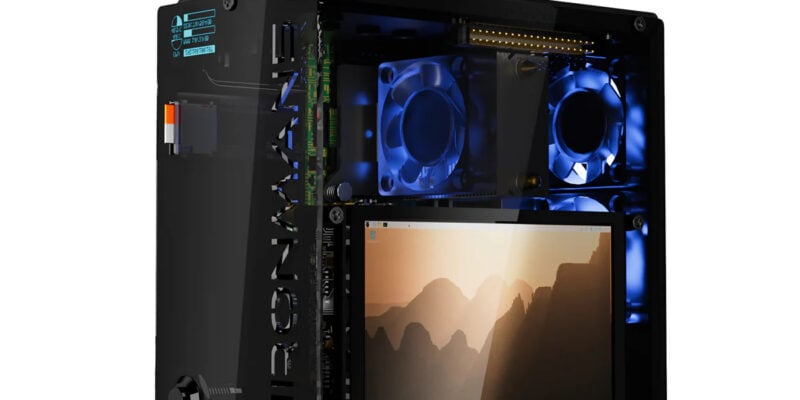
Win 1 of 3 Pironman 5 Pro Max cases!
Transform your Raspberry Pi with this amazing case
Read more →