BBC Computer Literacy archive
By Lucy Hattersley. Posted

The 1980s was a golden era for home computing. Let’s explore it all over again, says Rosie Hattersley
If you’ve ever wanted to know more about the history of British home computing, a whole treasure trove of interviews, TV shows, programming code, and photos has been assembled for your delectation and inspiration. The BBC has launched an archive of the BBC Computer Literacy Project (CLP).
This delightful archive of home computing and information technology includes all 146 TV programmes from a ten-year endeavour that began 36 years ago.
See also:
Rediscover Retro Computing in The MagPi #67
Easy retro gaming on a Raspberry Pi with Lakka and NOOBS

BBC Computer Literacy Project
Interviews with heroes of technology and personal computing – including Microsoft co-founder Bill Gates, Apple’s Steve Jobs and Steve Wozniak, and Apricot’s Roger Foster – are all now accessible from the BBC’s Computer Literacy Project Archive.
Launched back in 1982, the BBC’s Computer Literacy Project was intended to inspire and encourage a whole generation of coders and home computing enthusiasts. The impetus for its launch was a critical Horizon documentary in 1978 that suggested a ‘lack of awareness and competitiveness’ in the UK that meant Britain was likely to miss out on the social and economic benefits of microelectronics.
Such was the success of BBC Education’s CLP and the BBC Micro home computer (among others) that, says Hermann Hauser, co-founder of Acorn Computers, “Britain [was] the most computer literate nation on Earth at the time and with the BBC computer created a generation of UK programmers who have become leaders in their field.”
The BBC Micro was a major influence on the creation of the Raspberry Pi, which was designed to capture the coding heyday of the 1980s and increase the number (and quality) of students applying to study computing at Cambridge University.
Eben Upton, Raspberry Pi co-founder, told The Centre for Computing History: “The first computer I owned was a BBC Micro.” The initial idea for the Raspberry Pi arose from talking about redoing the BBC Micro (as a response to MIT planning an Apple II clone).
Learn computing with BBC
The original BBC TV shows are bound to fascinate anyone investigating the UK personal computing evolution for the first time, while evoking nostalgia in those who remember the 1980s BBC Computer Literacy Project.
The archive came about due to the difficulty for academics and technology historians to easily access treasures from the CLP. While the TV footage and interviews have been recovered, radio shows broadcast under the CLP banner appear to have been lost.
Many of the TV shows make for interesting viewing from a present-day perspective. In May 1980, The Silicon Factor getting a paint-spraying robot in a car factory to memorise the actions involved in writing a name on a sheet of paper was ground-breaking. “The memory is recording every single unsteady movement of the pen,” explained presenter Bernard Falk before showing the robot accurately reproducing his writing.
Meanwhile 1988’s Electric Avenue issued rather prescient warnings about data sharing and theft.
Mainly, however, the archive is about showing the possibilities and ideas of digital pioneers. As with the original CLP resources, BBC chief technology and product officer Matthew Postgate says the Computer Literacy Project Archive is “a unique resource for teaching and learning that will hopefully encourage a new generation of computer users.”
Install BBC BASIC on a Raspberry Pi
Back in 1982, the Acorn-built BBC Micro computer launched as a means of allowing home users to explore programming and coding. Homes and schools quickly bought into the personal computing revolution, with many of today’s most ardent computer fans citing the BBC Micro and its BASIC language as their first programming experience. You can easily install BBC BASIC on your Raspberry Pi. Open a Terminal and enter:
sudo apt-get update && sudo apt-get upgrade
sudo apt-get install brandy
Then enter brandy at the command line to open the Brandy Basic V Interpreter. Note that you will need to use CAPS LOCK to enter BBC BASIC code, as you need to type every command in capitals.
Lucy is Editor of Raspberry Pi Official Magazine.
Subscribe to Raspberry Pi Official Magazine
Save up to 37% off the cover price and get a FREE Raspberry Pi Pico 2 W with a subscription to Raspberry Pi Official Magazine.
More articles
Digital Displays in Raspberry Pi Official Magazine 170
Some projects seem more like magic to us than anything else; here’s one of them. This robot by Italian engineer/magician Andrea Favero uses a mirror to widen the field of vision of a Raspberry Pi Camera Module 3, the input from which is processed by Raspberry Pi 4 and used to control three legs to […]
Read more →
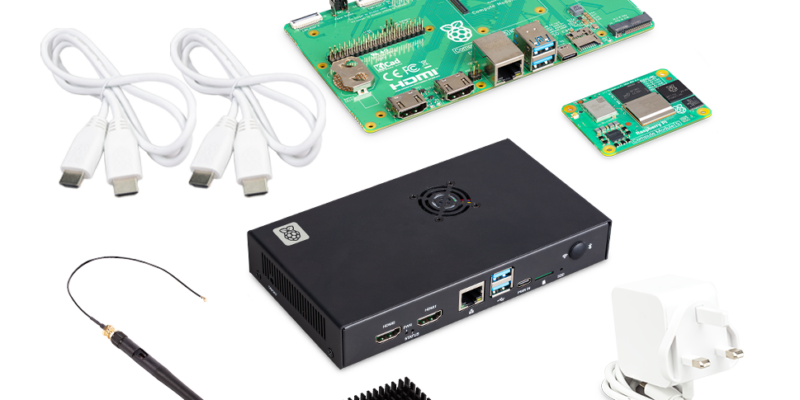
Win a Development Kit for Compute Module 5
Make CM5 development easier with our competition
Read more →
Raspberry Pi Official Annual 2027 is out now!
New name, same fantastic content
Read more →