Code Club International
By Russell Barnes. Posted

Code Club helps get kids coding around the world. Here’s how…

If you haven’t yet heard about it, Code Club is a global network of volunteer-led extracurricular coding clubs for children.
Code Club first started in the UK, back in 2012, to help children develop coding skills. Since then, this idea has spread around the world and there are now over 9,000 Code Clubs internationally.
In 2016, Code Club officially launched its international programme (Code Club International). Code Club partners with local NGOs (not-for-profit organisations). These share the mission to have a Code Club in every community in the world, and support the country’s local Code Club community.
Currently there are Code Club partners in ten countries. Code Club Australia, the biggest community outside the UK, has over 50,000 children attending Code Clubs. In fact, in 2016 they set a world record for the most kids coding at a single event. “Coding is the language of the 21st century”, says Kelly Tagalan from Code Club Australia. “Our mission is to make sure every Australian child has the opportunity to learn how to code, no matter where they live or what school they go to.”
Global volunteers
Anyone can start an individual Code Club in their local community, anywhere in the world (see ‘How to Start a Code Club’ below). There are clubs all around the globe, in countries such as Mauritius, Bermuda, Nigeria, Kazakhstan, the Philippines, and Israel.

Code Clubs come in all shapes and sizes and some of the most powerful Code Clubs make a big difference for a very small number of local kids.
Max Dolgikh runs a Code Club in Ukraine. He’s been teaching students to use Scratch. One Ukrainian boy, Vova, wrote a version of the classic game Arkanoid. “I was happy all day long,” says Max. “It’s worth teaching to just a single child to give them a better life.”
Volunteering at a Code Club is a good way for STEM graduates to pass on coding skills while developing communication skills.
“I have the opportunity to share my knowledge with young people in my community,” says Shohel Rana, a Code Club volunteer in Bangladesh. “At the same time, these experiences taught me to communicate concepts to a group, skills that will serve me in the future.”
Volunteering is also a good thing to do. “I feel really happy when I am volunteering at Code Club because I feel a sense of real achievement,” says Mizanur Rahman, a Code Club volunteer in Bangladesh. “These children do not have big ambitions and they think of doing similar jobs as their poor parents,” explains Mizanur. “At Code Club, we provide a creative platform. They can express themselves with confidence and learn skills with better career prospects.”
Code Club is looking for volunteers around the world. Anyone can start an individual Code Club in their local community.
Start a Code Club in your local area and you’ll get to inspire the next generation of digital makers. Visit Code Club International and don’t forget to register your club. Class projects are completely free, and available in 25 languages – from French and Spanish to Korean, Arabic, and Hebrew – for registered Code Clubs. Visit the Code Club website to see how you can help.

Russell runs Raspberry Pi Press, which includes The MagPi, Hello World, HackSpace magazine, and book projects. He’s a massive sci-fi bore.
Subscribe to Raspberry Pi Official Magazine
Save up to 37% off the cover price and get a FREE Raspberry Pi Pico 2 W with a subscription to Raspberry Pi Official Magazine.
More articles
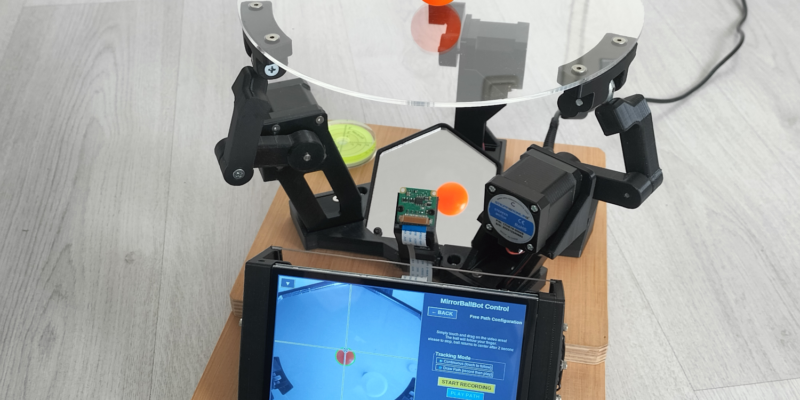
MirrorBallBot
This trick uses no smoke but it does use mirrors
Read more →

Digital Displays in Raspberry Pi Official Magazine 170
Some projects seem more like magic to us than anything else; here’s one of them. This robot by Italian engineer/magician Andrea Favero uses a mirror to widen the field of vision of a Raspberry Pi Camera Module 3, the input from which is processed by Raspberry Pi 4 and used to control three legs to […]
Read more →
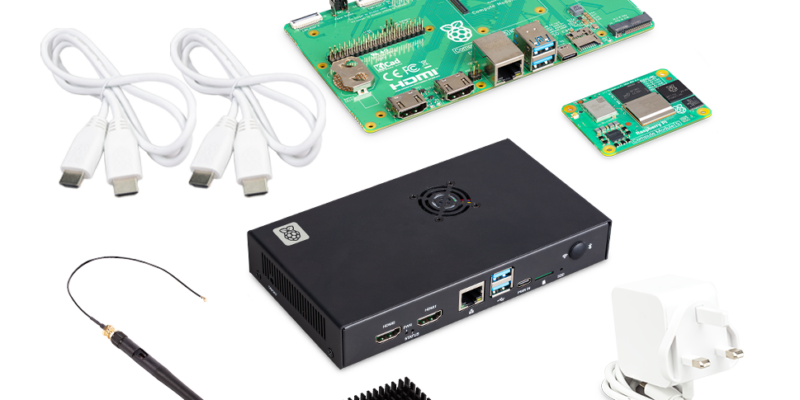
Win a Development Kit for Compute Module 5
Make CM5 development easier with our competition
Read more →