Firefighter Monitoring System
By Lucy Hattersley. Posted

A switched-on high school student is developing a device to monitor the vital signs of firefighters. Nicola King puts her finger on the pulse
When Parisa Khashayar witnessed a firefighter being treated for an injury during a wildfire, she began to ask herself how, or even if, firefighters’ health and well-being was monitored while they were out in the field: “Firefighters put themselves in danger to keep us safe, but I asked myself, what keeps them safe? Besides their fire-resistant suit, what other measures are taken to ensure their safety? My research showed that there wasn’t a lot of high tech equipment available to monitor their health and warn them of dangerous conditions.”
This article was written by Nicola King and first appeared in The MagPi magazine issue 79. Click here to subscribe to The MagPi,
Having confirmed with a local fire station that a device to monitor firefighter health would indeed be useful, Parisa set about designing and building her Monitoring System.
“I started planning and designing the device when I was in eighth grade (about a year and a half ago),” she tells us. “I knew some coding, but I had to learn how to connect the hardware pieces together.”
Firefighter Monitoring System: Quick Facts
- Sensors monitor gas, temperature, motion, and heart rate
- She plans to turn it into a Pi-based wearable device
- It won joint first place for hardware at Coolest Projects USA 2018
- Details of Coolest Projects 2019 can be found at coolestprojects.org
- Parisa hopes to study biomedical engineering in the future
Decisive data to fight fires
Parisa’s device cleverly takes key measurements and compares them to threshold data.
“I used a microprocessor and four different sensors to collect and measure data about a firefighter’s condition as well as their surrounding environment,” she explains. “My code takes that information and compares it to a preset threshold; if the data does not fit within that threshold, it will send a message to the nearby command centre through cellular technology.
Parisa admits there was a lot of fine-tuning required in order to develop her project. “The hardest part of my first design was definitely coding the heart rate sensor and the GSM. The heart rate sensor needed a lot of calculations to convert the raw data to an actual heart beat and heart rate. The GSM is what I used to send the notification out.”

Undeterred, Parisa forged ahead with her design, culminating in the opportunity to showcase her work at Coolest Projects USA in 2018, an exciting technology fair for young people. “We talked about problems we encountered with our projects and exchanged ideas… One of the best parts was meeting the judges; they were incredibly encouraging and excited to find out about everyone’s work,” she says.
Having used an Arduino Uno for her original prototype, Parisa is now converting the project to Raspberry Pi so that the size of the device can be reduced. Introduced to the Pi at Coolest Projects, she explains that she saw how “powerful, yet simple, it is to program… I plan to get everything into a PCB small enough to fit into a wearable, and test it out with one of the fire stations nearby who agreed to help test out my prototype.”

Hot shot coder
With this exciting, practical, and potentially life‑saving innovation, Parisa has proved that coding is her forte, and is something that she thoroughly enjoys, explaining, “It is a way to express myself and [of] connecting myself to the outside world… It is very gratifying to design and build and code a machine that can perform a task and solve a problem.”
So, what does the future hold for this very smart student? “I just started high school this year with a full schedule that’s kept me busy, so I haven’t had much time to get back to the drawing board. I will always be looking for new ways to solve problems but, for now, I’m mostly focused on improving my Firefighter Monitoring System before I move on to another project,” says Parisa, who is clearly destined for great things. Watch this space!
See also:
National Centre for Computing: Raspberry Pi £78m education boost

Lucy is Editor of Raspberry Pi Official Magazine.
Subscribe to Raspberry Pi Official Magazine
Save up to 37% off the cover price and get a FREE Raspberry Pi Pico 2 W with a subscription to Raspberry Pi Official Magazine.
More articles
MirrorBallBot
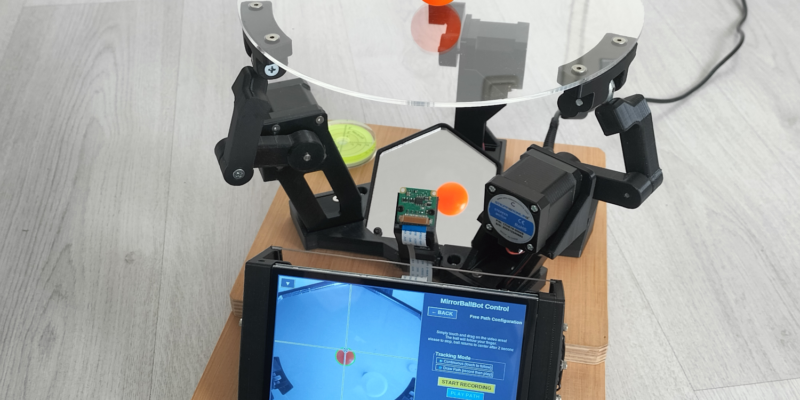
This trick uses no smoke but it does use mirrors
Read more →

Digital Displays in Raspberry Pi Official Magazine 170
Some projects seem more like magic to us than anything else; here’s one of them. This robot by Italian engineer/magician Andrea Favero uses a mirror to widen the field of vision of a Raspberry Pi Camera Module 3, the input from which is processed by Raspberry Pi 4 and used to control three legs to […]
Read more →
Win a Development Kit for Compute Module 5
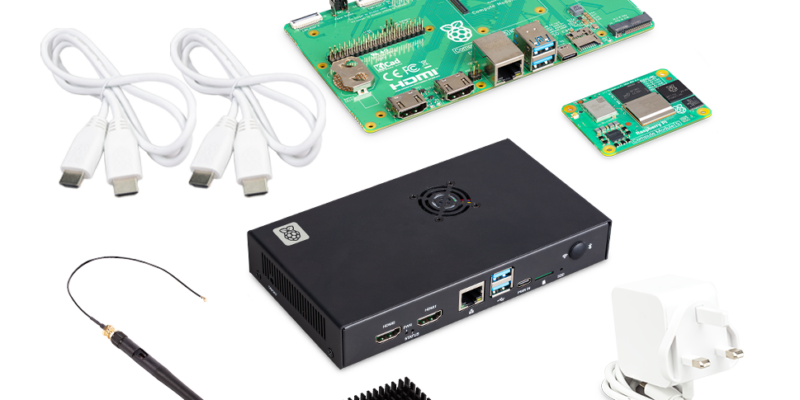
Make CM5 development easier with our competition
Read more →