Inky Frame 7.3″ review
By Phil King. Posted

The Inky Frame 7.3" (£90/$93) is the big daddy of e-ink displays, offering a usable area of 160mm by 96mm – a widescreen aspect ratio of 1.67:1. With an 800×480 resolution, that gives a pixel density of 127.8 PPI; while notably lower than the 188.7 on its Inky Frame 4.0˝ smaller sibling, it’s perfectly adequate in practice.
Other than that, it’s very similar in design to the previous Inky Frame models, with a seven-colour e-ink display with five tactile user buttons underneath. It’s based around a standard Raspberry Pi Pico W board pre-soldered to the rear of the board, so you can connect it to a computer via USB for programming, as usual. The rear also features two Qwiic/STEMMA QT ports (for attaching breakouts) and an extension header (including six GPIOs), along with a reset button, microSD card slot (extra storage for images etc.), and JST battery connector.

Slow but ultra-efficient
Like other e-ink displays, the Inky Frame 7.3˝ takes a while to refresh the screen: typically 25–30 seconds – a little longer if rendering JPG images. The big advantage is its ultra-low power drain: e-paper only uses power while refreshing. As well as keeping time, the on-board real-time clock can place Pico into an ultra-deep sleep mode that uses a tiny 20 μA until woken.
Software-wise, it’s preloaded with Pimoroni’s MicroPython firmware, including the PicoGraphics display library and several code examples. To connect Pico W to your wireless network, just fill in the SSID and password in the secrets.py file – see the Getting Started guide for more details.
Verdict
9/10
All the low-power advantages of colour e-ink combined with larger screen estate makes this a formidable display.
Specs
Display: 7.3-inch e-ink, 800×480 pixels, seven colours
Features: Pico W, 5 × user buttons, reset button, LEDs, microSD card slot, breakout header, 2 × Qwiic/STEMMA QT ports, 2 × metal legs
Dimensions: 176.2 × 139.2 mm

When not editing books and contributing to The MagPi, Phil enjoys playing the piano (badly), astronomy, and watching classic sitcoms.
Subscribe to Raspberry Pi Official Magazine
Save up to 37% off the cover price and get a FREE Raspberry Pi Pico 2 W with a subscription to Raspberry Pi Official Magazine.
More articles
Digital Displays in Raspberry Pi Official Magazine 170
Some projects seem more like magic to us than anything else; here’s one of them. This robot by Italian engineer/magician Andrea Favero uses a mirror to widen the field of vision of a Raspberry Pi Camera Module 3, the input from which is processed by Raspberry Pi 4 and used to control three legs to […]
Read more →
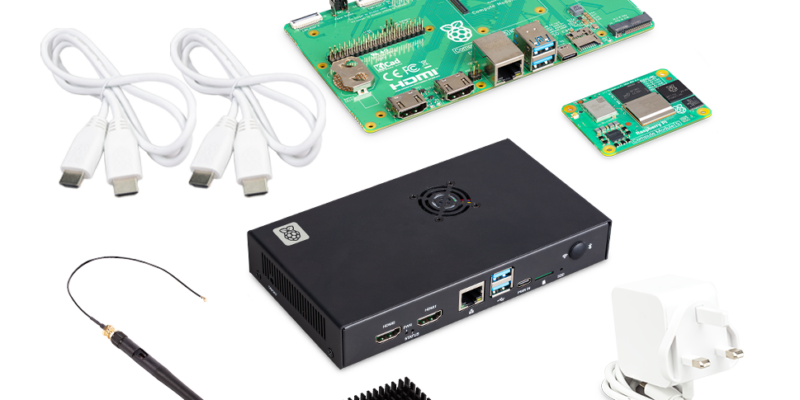
Win a Development Kit for Compute Module 5
Make CM5 development easier with our competition
Read more →
Raspberry Pi Official Annual 2027 is out now!
New name, same fantastic content
Read more →