Nin10do community project
By Russell Barnes. Posted

A 3D-printed Raspberry Pi-powered Nintendo Entertainment System that can also play Sega games…
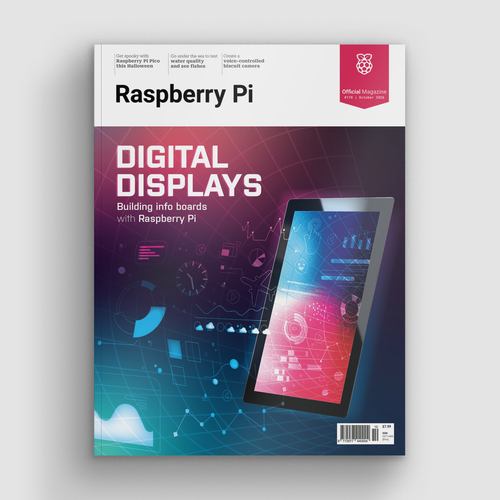
The full article can be found in The MagPi 36
When you’re a magician looking to make your tricks – sorry, illusions – better, you have several paths to go down. You could start buying or recreating other people’s work; however, that’s not entirely original, and you risk other people having seen it already. What truly great magicians do is to create their own illusions – original tricks that wow an audience with a wonderful show. Creating tricks and illusions for people-sized magic sounds similar to another hobby: that of being a maker. Makers love the Raspberry Pi, and this is where professional magician Daniel Spies found himself at the end of 2014.
“I wanted to start learning how to program in Python so I could integrate a Raspberry Pi in complex magic acts,” Daniel tells us. “The Raspberry Pi would be great for starting special music or sound effects, operating small smoke machines or even electromagnets. After I mastered the basics (servos, LEDs, etc.) it was time to build something as a practice project. It had to include as many different skills as possible, like CAD drawing, 3D printing, mechanical engineering, programming, and electronics. Then I saw guys on YouTube using their Raspberry Pi to emulate classic games on their TV. The idea was born.”

Daniel decided to 3D-print his own custom NES case for the Raspberry Pi; it was smaller, sleeker and with a few more tricks than the 30-year-old console, including motors, lots of flashing lights, and the ability to play N64 games. There were some rules for the project to make it worthwhile as a test run for bigger things, though.
“[These] rules included the Nin10do must look like a firm professional game console; it must run my Python script in the background but not sacrifice any speed or usability; it must have a option to be turned on and off without damaging the software or the SD card, and the cover must not damage itself if, for some reason, it is opened twice by the stepper motor.”
With this in mind, Daniel went to work. He created full schematics for the electronics, making use of a series of LEDs, stepper motors, driver boards, timing belts, and lots of extenders to reach the I/O ports to make it actually usable. All of the components used were basic ones, so while there was a lot of soldering involved, he wasn’t gutting any existing devices to make the project work.

With this and the coding in place (which you can find on his GitHub page), Daniel designed and 3D-printed a case reminiscent of the NES that could house his Raspberry Pi and electronics. The important question, though, was whether or not he succeeded…
“The latest version runs very stable!” Daniel reveals. “I added some parts a while ago (small capacitor in the second momentary switch) and changed the USB hub to a better version. This solved the last (minor) bugs.”
The full build process, printable 3D models and code are all available online from Daniel, so if you want to give it a go yourself, the tools are there. There may even be a kit coming in the future…

Russell runs Raspberry Pi Press, which includes The MagPi, Hello World, HackSpace magazine, and book projects. He’s a massive sci-fi bore.
Subscribe to Raspberry Pi Official Magazine
Save up to 37% off the cover price and get a FREE Raspberry Pi Pico 2 W with a subscription to Raspberry Pi Official Magazine.
More articles
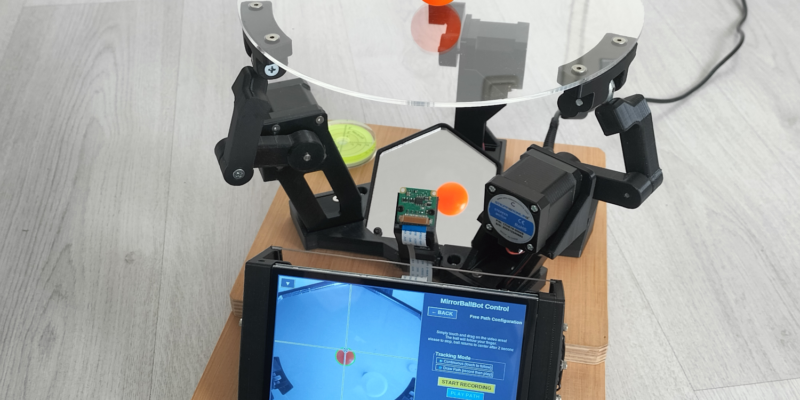
MirrorBallBot
This trick uses no smoke but it does use mirrors
Read more →
Digital Displays in Raspberry Pi Official Magazine 170
Some projects seem more like magic to us than anything else; here’s one of them. This robot by Italian engineer/magician Andrea Favero uses a mirror to widen the field of vision of a Raspberry Pi Camera Module 3, the input from which is processed by Raspberry Pi 4 and used to control three legs to […]
Read more →
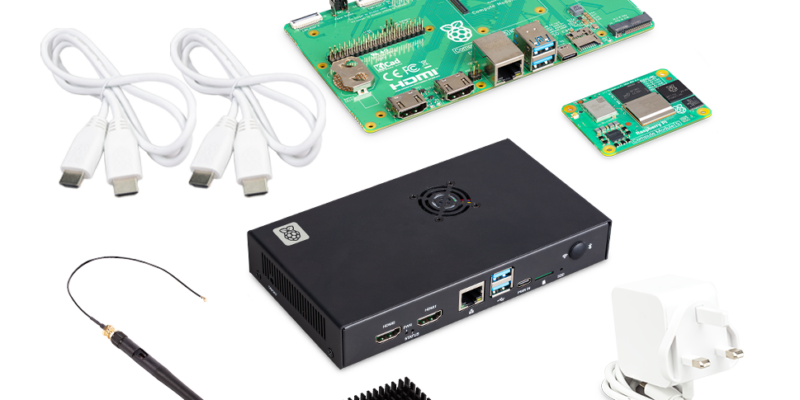
Win a Development Kit for Compute Module 5
Make CM5 development easier with our competition
Read more →