Pico-8 review
By Russell Barnes. Posted

Build, play, and share 8-bit games with this imaginary console with built-in code-, sprite-, and music-editing tools
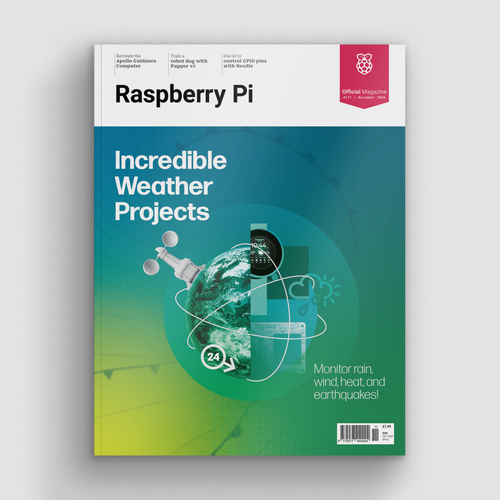
Imagine the best console from the 1980s that you never owned. As well as being able to play free games, you would be able to stop them at any time and dive backstage.
You could tweak the code to make it easier, harder, or different. The built-in sprite editor and sound effects tools would let you customise the graphics. And there’d be a level editor for building new stages or changing existing ones.
The full article can be found in The MagPi 48 and was written by Lucy Hatterseley
That’s PICO-8. It’s a virtual games console, but instead of being an actual 8-bit console, it recreates a virtual console with built-in editing tools.
PICO-8 was developed by Joseph White from his base at Pico Pico Cafe in Kichijouji, Tokyo. It’s been around for Windows, Mac OS X, and Linux machines, but feels more naturally at home on the Raspberry Pi, where it can become the console it was meant to be.
PICO-8 runs just fine on the Raspberry Pi hardware. We’d be surprised if it didn’t, because a key aspect is a deliberately limited feature set. The display is just 128×128 blocks with 16 colours. Sprites are 8×8 pixels, and you can only have 128 on screen at once.
The virtual cartridges (saved as PNG files) are limited to 32kB, and it has a four-channel sound chip.
Imagine it sitting alongside a NES or PC Engine in terms of technical prowess. These deliberate limitations make PICO‑8 more engaging. The games have a retro-cool aesthetic and they’re easier to build. The low-spec nature of the console helps newcomers get started.
Cde is written in Lua. It’s a relatively simple language to learn and mostly used for scripting Adobe programs. While it’s no Python, Lua is worth learning. Games can be shared in a web browser, so you can see what sort of thing is possible on the Lexaloffle website.
Community service
A vibrant community has sprung up around PICO-8, with one of the most active fan bases we’ve seen. The forums are packed with interaction between developers, with everybody chipping in and offering to help.
If there’s one downside, it’s that PICO-8 is a paid-for program. But we think it’s great value given the amount of fun we had, along with the active community.
Last word
5/5
We had a huge amount of fun with PICO-8, and it's a natural fit for the Raspberry Pi.

Russell runs Raspberry Pi Press, which includes The MagPi, Hello World, HackSpace magazine, and book projects. He’s a massive sci-fi bore.
Subscribe to Raspberry Pi Official Magazine
Save up to 37% off the cover price and get a FREE Raspberry Pi Pico 2 W with a subscription to Raspberry Pi Official Magazine.
More articles
Incredible Weather Projects in Raspberry Pi Official Magazine issue 171
If the planet gets too hot/too cold/too drizzly for human habitation, we’ll probably want to leave Earth in search of a better one. That means we’ll need a flight computer, and maker Michael Newton is one step ahead: he’s built a replica of the DSKY (display keyboard) interface from the Apollo Guidance Computer. Now you […]
Read more →
Win one of five Sense HAT bundles
Get a Sense HAT add-on and book in our latest competition
Read more →
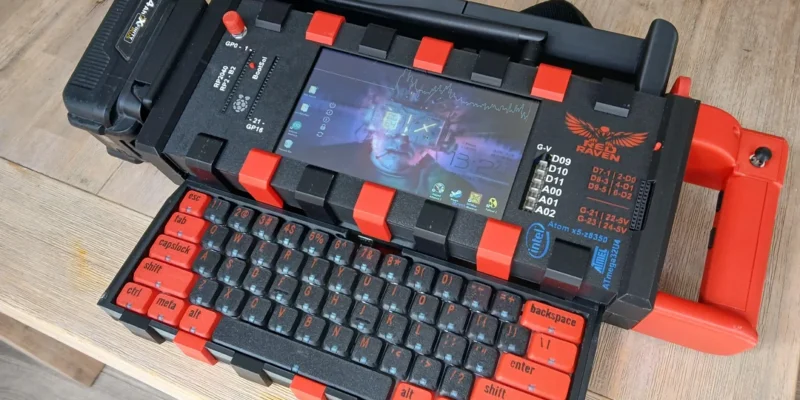
Red Raven cyberdeck
Powered by drills
Read more →