Sandeep Mistry profile
By Rob Zwetsloot. Posted

Over the years we’ve found that however senior you are as a software or hardware engineer, tinkering with a Raspberry Pi or Pico is pretty universal. We’ve featured projects from engineers at Raspberry Pi in the past but it’s true in other companies – like Sandeep Mistry from Arm who works within the IoT Line of Business (LoB). He creates projects that illustrate what folks can do with Raspberry Pi technology.
“I’ve been making things from a young age.” Sandeep tells us. “It started off with building things like LEGO, then moving onto higher tech things after getting the opportunity to attend the Virtual Ventures summer camp (carleton.ca/vv). I was very fortunate that the high school I went to offered courses in computer science, so I had the opportunity to learn about how to make software applications before going to university. After getting a university degree in computer systems engineering, I’ve worked as a software engineer creating software for end products and platforms.”
After working for various companies as a software engineer in Ottawa, and also working remotely with Arduino, he started looking for a new way to use his expertise with embedded and mobile devices. There’s not much better place than Arm for that, and when an acquaintance of his mentioned a position coming up, he jumped at the chance.
He’d already worked on a Raspberry Pi Pico project before joining Arm – if you cast your mind back to 2021 around the time Pico was released, he built a way to add Ethernet to Pico via the PIO. It was even featured on the blog. Since then, he’s been putting out software and hardware projects of varying levels of complexity, and has really shown off the power of Raspberry Pi in the process.
Sandeep's builds
Give a plant a personality

“[A favourite project of mine] was using Pico W to create a plant that texts you when it needs water, after it’s been watered, good morning/night, and random jokes,” Sandeep says. “It was the first time I used MicroPython, and it was fun to use the Pico W to give a plant a personality.”
See sound in real time

Building on the Pico microphone project, this project shows how you can create cool visualisers for sound using a display also hooked up to Pico. These specific visualisations are audio spectrograms, which display sound as amplitude over time for cool visual effects.
Create a USB microphone

Pico can do a lot with its PIO capabilities – and it also has an ADC (analogue-to-digital converter) onboard. Combining the ability to connect to a system as a USB device while also listening to a microphone means you can create a custom Pico-powered mic. It’s an interesting and fairly cheap way to add a mic to a computer.

Rob is amazing. He’s also the Features Editor of Raspberry Pi Official Magazine, a hobbyist maker, cosplayer, comic book writer, and extremely modest.
Subscribe to Raspberry Pi Official Magazine
Save up to 37% off the cover price and get a FREE Raspberry Pi Pico 2 W with a subscription to Raspberry Pi Official Magazine.
More articles
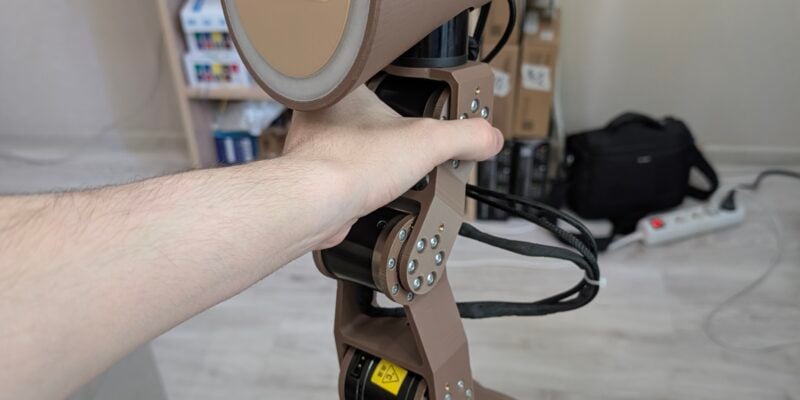
Robot arm lamp
This won’t be jumping on any animation studio logos
Read more →
Sage Cadence interview
An electrical engineering student trying to provide the educational content she would have wanted
Read more →

Retro gaming in Raspberry Pi Official Magazine 169
Retro gaming on Raspberry Pi: a chance to relive the games of your youth. Or if you’re too young to remember the Nintendo Entertainment System, Sega Mega Drive and Amiga, relive the games of someone else’s youth instead. Maybe games aren’t your thing; maybe you’d rather settle down and write for hours, coming up for […]
Read more →